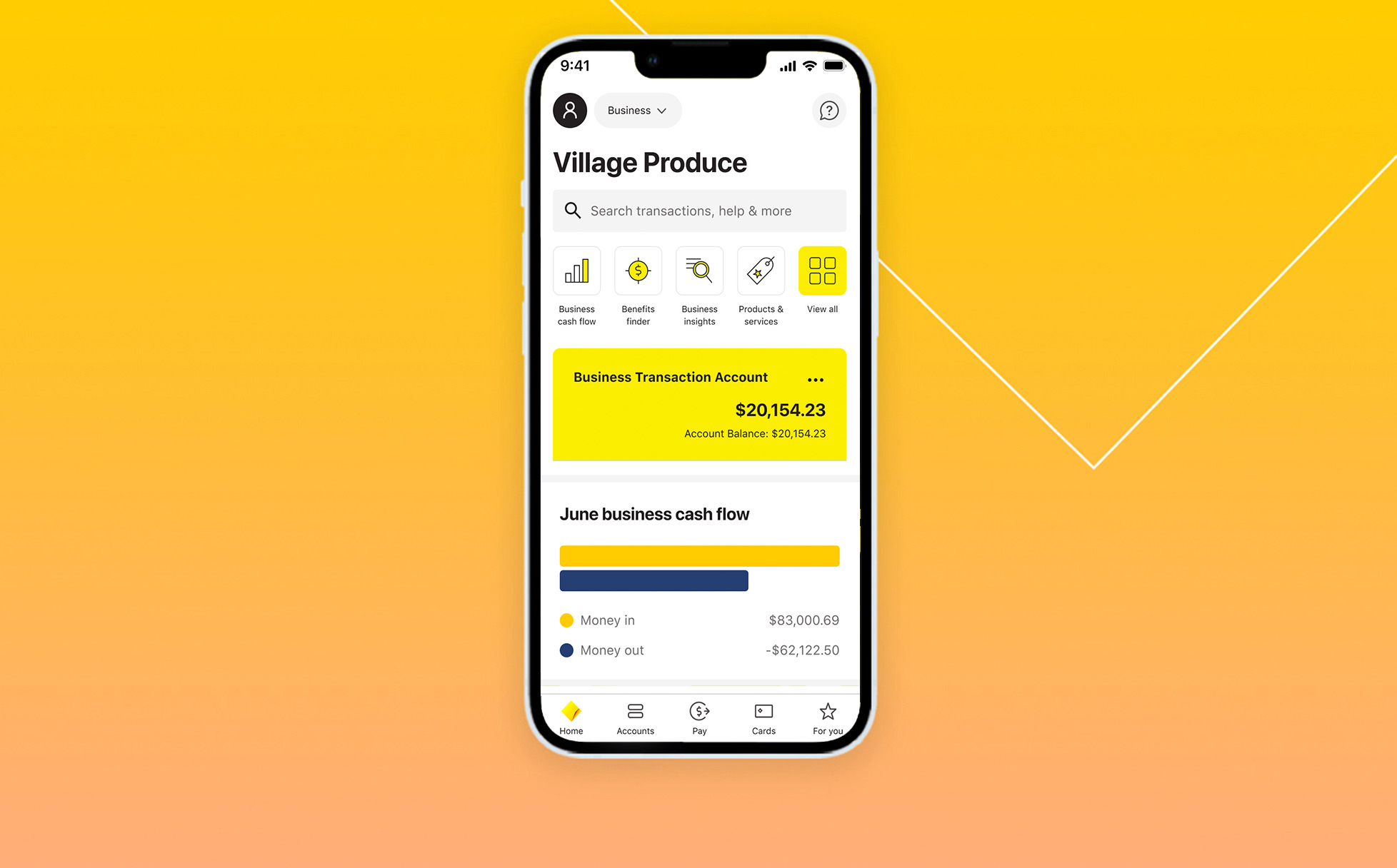


Good cash-flow management can help ensure your business always has enough money on hand to pay bills and expenses. This is important at a time when costs are forecast to rise, increasing the demands on your cash reserves.
Here are practical tips to help you manage your cash flow and keep more money flowing into your business than out – and to build a cash reserve you can fall back on in an emergency.
1. Monitor your business' cash flow
Prepare annual, quarterly and monthly cash flow projections and closely monitor your operating expenses, overheads, stock levels, debt collections and profit. An accountant can help review your cash flow to highlight areas you may have overlooked, and plan for potential cash flow problems.
If you've got a CommBank Business Transaction Account, set up smart alerts and we'll instantly tell you if your account balance is low, high, overdrawn or if you've just been paid.
2. Make finance work for you
If you already have business finance in place, this is a good time to think about how you’re managing it and whether you have the right level of borrowing for your business. Your local Small Business Specialist can help answer questions about things you need to consider, such as fees, interest rates and payment terms.
Depending on your needs, a flexible credit facility such as an overdraft can help you cover unexpected short-term expenses while only paying interest on the funds you use. For larger purchases, a BetterBusiness Loan could be a more cost-effective option, giving you lower interest costs than more short-term finance, with the flexibility to make extra repayments then redraw them later.
3. Create a cash buffer or use your redraw
Creating an emergency fund for your business, in the same way that you might for your personal finance, can help you be prepared for any unexpected expenses or cost increases. If you have a BetterBusiness Loan you can use spare cash to make extra repayments on your loan, then keep them at the ready in your redraw facility.
That helps you pay less interest, because any money available in your redraw – whether its $10 or $10,000 – reduces the balance owing on your business loan. Then, when you need extra cash, you can access your redraw online using NetBank, CommBank App or CommBiz.
You can also take advantage of your lower balance to adjust your repayments to the minimum repayment amount, improving your cash flow. But remember – lowering your repayments will reduce your available redraw balance over your agreed loan term.
4. Speed up payments
Receiving payments faster will boost your cash flow. One of the easiest ways to speed up your payments is to send invoices or ask for payment immediately after you’ve delivered your goods or services.
A mobile EFTPOS device, including Smart, can give your customers an easy way to pay on the spot, and receive same day settlements, removing invoice time lags in an all-in-one EFTPOS terminal.
5. Tighten your terms of trade
You may also want to consider shortening payment terms, or the time you can give your customers to pay, particularly if they are longer than 30 days. Set out clear payment guidelines for your customers and consider reviewing your supply terms if a customer regularly fails to pay on time. Think about offering a discount for early payment or put a statement on your quotes and invoices indicating that you reserve the right to charge interest on overdue accounts.
6. Don’t pay early if you don’t have to
It’s also worth checking your suppliers’ payment terms and making sure you don’t pay early if you don’t have to. For example, if a payment is due in 30 days, don’t pay it in seven days unless there is a discount for early payment. This will help you keep money in your account for longer.
Using a business credit card to pay suppliers can be a way to manage cash flow while taking advantage of interest-free payment periods, so long as you can pay your closing balance in full at the end of each month.
7. Separate personal and business accounts
Separating your personal and business finances can make it easier to keep track of your business cash flow. It will also keep your expenses separate, saving you time and money when it comes to doing or asking your accountant to do your tax reconciliation or business activity statement.
Opening a separate business savings account may allow you to earn interest on your cash while still leaving funds accessible when you need them.
8. Review your inventory
Do regular inventory reviews to hold only as much stock required to run your business efficiently. Excess stock can tie up cash and increase storage and insurance costs.
9. Budget your spending
If you’re a start-up, it can be easy to overspend as you try to make an impact. Keeping key jobs at the top of your list of things to do can help you prioritise things such as launching or promoting your business. Thinking about the cost and the relative benefit it might bring can help you assess what you need to do and what might be an ‘impulse spend’.
A business budget can help you to keep cash flow healthy, because you’ll know what you can afford to spend, and when. Setting and monitoring a budget will also encourage you to review your spending so you can make sure it’s as efficient as possible.