Help & support
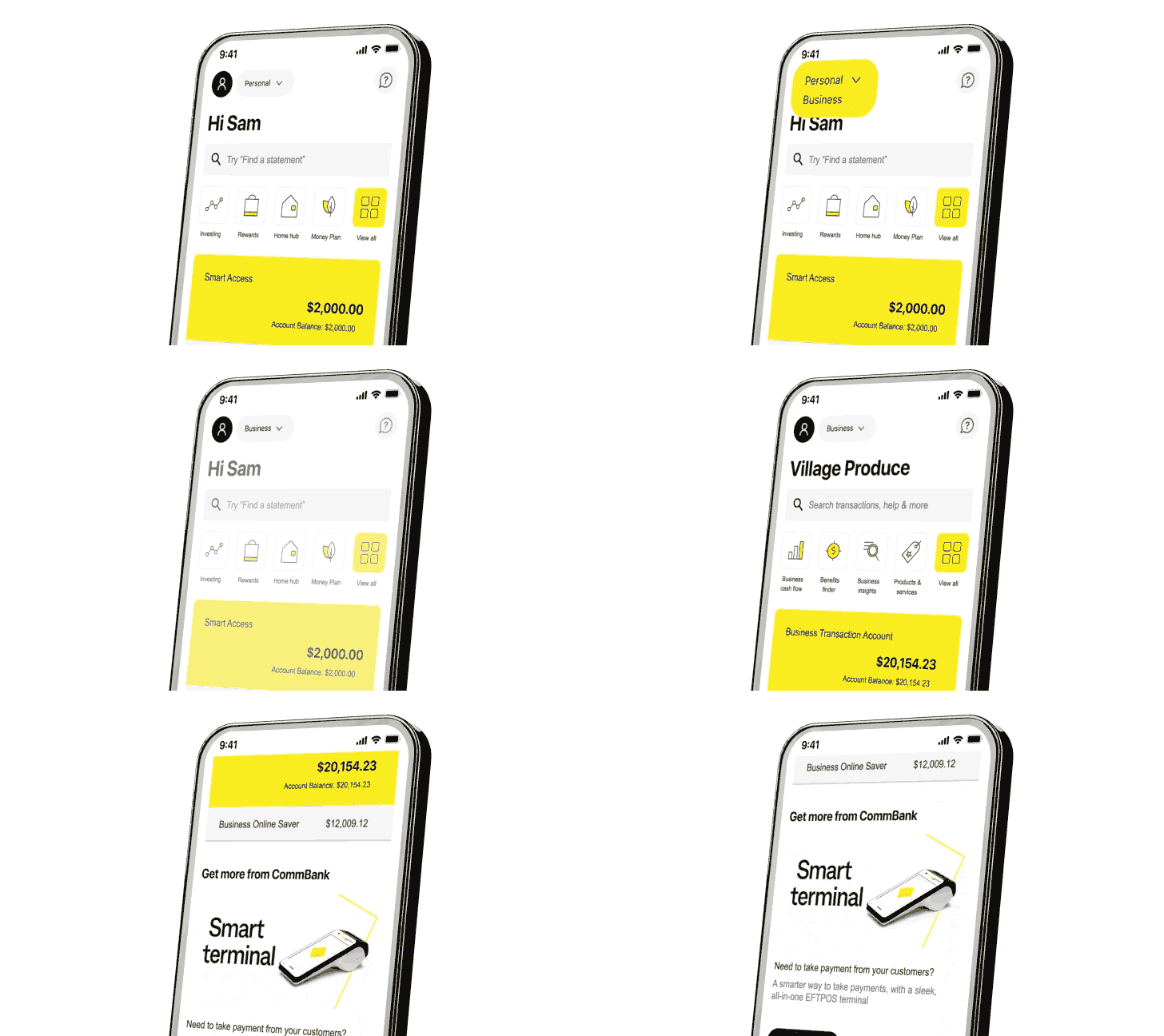
Bank with the business bank that helps to keep your money safe, your doors open and your cash flow moving.
Make the most of our exclusive deals and discounts, tailored for businesses just like yours.
Doshii are waiving subscription fees on plans for eligible CommBank merchants. Exclusive limited time offer.
Already a CommBank customer? Eligible existing customers may be conditionally approved for a Business Overdraft and get funds within minutes.^^
Apply in under 10 minutes.
Make the most of your business savings with our standard Business Investment Account.
Offer available from 15 May 2026 for a limited time only.§
CommBank with OpenAI announces a national technology skills initiative to help Australia’s small businesses build AI, cybersecurity and digital capabilities to lift productivity and drive growth.
CommBank with OpenAI announces a national technology skills initiative to help Australia’s small businesses build AI, cybersecurity and digital capabilities to lift productivity and drive growth.
Our selector tool can help you in 3 simple steps:
Answer a few questions about your business
Compare and choose from our products and services
View a summary of your choices and next steps
Used this tool before? Retrieve your summary
As this advice has been prepared without considering your objectives, financial situation or needs, you should, before acting on this advice, consider its appropriateness to your circumstances. You can view the Terms and Conditions for Business Transaction and Savings Accounts (PDF), Merchant Agreement, our Financial Services Guide (PDF) and the Electronic Banking Terms and Conditions (PDF) and should consider them before making any decision about these products and services. Bank fees and charges may apply.
1 The Small Business Exceptional Everyday Account award was received in 2020-2024 for our Business Transaction Account - $0 monthly account fee option. For more information, visit mozo.com.au.
3 CommBank Yello for Business is available to business customers who meet certain eligibility criteria. Exclusions apply, and both the exclusion and eligibility criteria are subject to change. CommBank may review eligibility and participation based on factors it considers relevant and may update its criteria from time to time. View information on eligibility. Displayed offers may not be accessible to all eligible business customers at all times. For specific provider offer terms and conditions, refer to the CommBank Yello for Business webpage, or access the program via your business profile in the CommBank app for more information.
^ Canstar 2025 Digital Banking - Bank of the Year
≠ This link will bring you to the Doshii website, owned and operated by Doshii Connect Pty Ltd, a wholly owned but non-guaranteed subsidiary of the CBA. Any use of the Doshii website will be subject to and any information you provide to Doshii will be governed by the Doshii’s terms and privacy policy. CBA is not responsible for the services offered by Doshii and does not endorse or approve, or make warranties, representations or undertakings relating to the content of the Doshii website.
^1 Eligible CommBank merchants in Australia using a CommBank EFTPOS terminal can enjoy any Doshii plan at no cost, including Ordering and Delivery apps, Business apps and Virtual Brands. Charges from app and POS Partners, as well as terminal fees, may apply. This offer is available to existing and new merchants that sign up to Doshii before 31 Dec 2026. Doshii may modify or end the offer at any time. For more, see full Offer terms and conditions on the Doshii website.
§ Interest paid at maturity. Offers available from 15 May 2026 for a limited time only. Information provided (including interest rates) are subject to change. We reserve the right to close or vary this offer at any time. These offers are available for customers eligible for a Business Investment Account, however not applicable to Financial Institution customers. These offers cannot be used in conjunction with any other bonus or special interest offers. This information has been prepared without taking into account your individual or business needs and objectives. You can view the General Information and Terms and Conditions for Business Investment Accounts, Electronic Banking Terms and Conditions (PDF) and our Financial Services Guide and should consider them before making any decision about these products and services.
The target market for these products will be found within the product’s Target Market Determination.
^^An instant decision is subject to the Bank's eligibility and suitability criteria.
Credit provided by the Commonwealth Bank of Australia. These products are only available to approved business customers and for business purposes only. Applications for finance are subject to the Bank's eligibility and suitability criteria and normal credit approval processes. View our current Terms and Conditions for Business Finance and consider them before making any decision about these products. Rates, fees, charges and Terms and Conditions apply.
This page is intended to provide general information only and does not take into account your individual objectives, financial situation or needs. The above information is not tax advice.
Taxation laws are complex and subject to change. Commonwealth Bank does not provide tax (financial) advice under the Tax Agent Services Act 2009 (Cth). You should consider seeking independent tax advice from a registered tax agent, accountant or adviser before you make any decisions based on this information.