'Inflation risks are shifting': Australian GDP rises 0.4% as RBA weighs outlook

CBA economists say economic growth hits its ‘speed limit’ as the Reserve Bank prepares for a December meeting where risks to inflation could be highlighted.

3 December 2025

Aisle in supermarket

Key takeaways

  • GDP grew 0.4% in Q3 and 2.1% annually, marking a sharp turnaround from last year’s sluggish pace.
  • Productivity improved 0.2% for the quarter, but unit labour costs remain elevated at 5.4% annually.
  • The RBA is expected to hold rates at 3.60% next week, but its language is likely to continue to tilt towards upside risks to inflation.

What does the GDP result mean for the economy?

Australia’s economy expanded by 0.4 per cent in the September quarter, lifting annual growth to 2.1 per cent. That’s a big improvement from just 0.8 per cent a year ago, driven by household spending, business investment and solid public demand. 
Economists say this pace suggests the economy has reached its current “speed limit” - meaning spare capacity is largely absorbed and it’s now more likely that the economy will grow faster than previously expected.

“This recovery is welcome, but it also means inflation risks are shifting,” said Belinda Allen, Head of Australian Economics. 

“The Reserve Bank of Australia will be watching upcoming price data closely to judge whether stronger inflation is more persistent than expected.”

Dwelling price growth November 2025

What’s driving growth?


Household consumption rose 0.5 per cent in the quarter and 2.5 per cent over the year, supported by real disposable income growth. 

The savings rate was revised higher to 6.4 per cent, showing households have been able to spend and save as income growth normalises and interest rates remain low.

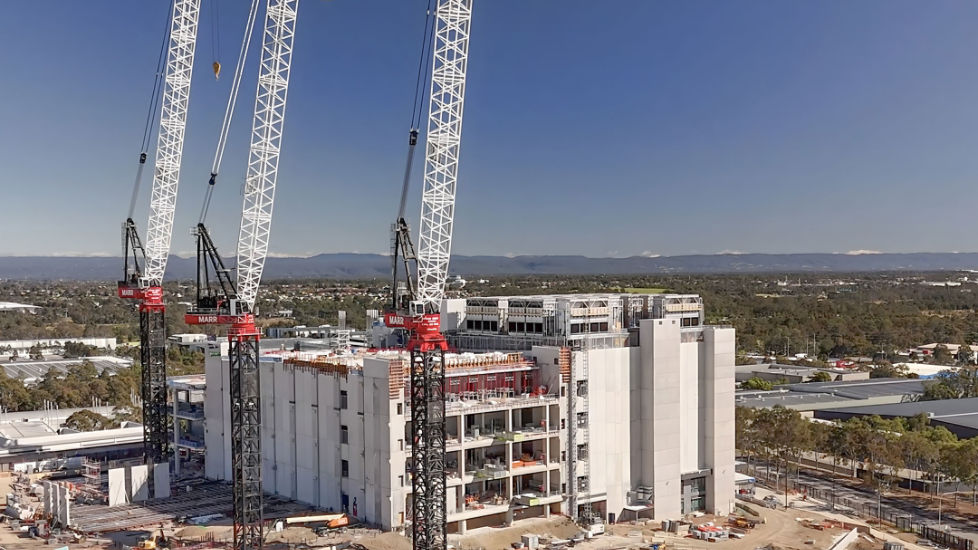
Business investment lifted 3.2 per cent, led by data centre projects in NSW and Victoria, although the National Accounts figures were softer than expected. Dwelling investment also rose strongly, up 1.8 per cent for the quarter and 6.5 per cent annually — as lower rates supported construction activity.

Both private and government sector demand contributed to growth, with private demand adding 0.8 percentage points compared to 0.3 points from public demand. Productivity gains of 0.2 per cent for the quarter and 0.8 per cent annually were a bright spot, but unit labour costs – the cost of wages and other employee-related items per unit of output- remain high at 5.4 per cent per year.

AUction clearance rates November 2025

Why does this matter for interest rates?

The RBA meets next week for its final policy decision of 2025. The cash rate is expected to stay at 3.60 per cent, but the tone of its comments could tilt more towards Highlighting upside risks than downside risks.

If underlying inflation, measured by trimmed mean CPI, surprises higher in the December quarter, economists believe February could bring a pivot towards rate hike discussions.

RBA Governor Michele Bullock told Senate Estimates today that if inflation proves “more persistent” than expected, demand pressures could force a rethink on monetary policy. 

For now, the RBA is likely to wait for full quarterly inflation data due in late January before making any major moves.

Read Belinda Allen’s full analysis: GDP initial views and December RBA preview

Newsroom

For the latest news and announcements from Commonwealth Bank.

Things you should know

The information presented is an extract of a Global Economic and Markets Research (GEMR) Economic Insights report. GEMR is a business unit of the Commonwealth Bank of Australia ABN 48 123 123 124 AFSL 234945.


This extract provides only a summary of the named report. Please use the link provided to access the full report, and view all relevant disclosures, analyst certifications and the independence statement.


The named report is not investment research and nor does it purport to make any recommendations. Rather, the named report is for informational purposes only and is not to be relied upon for any investment purposes.


This extract has been prepared without taking into account your objectives, financial situation (including your capacity to bear loss), knowledge, experience or needs. It is not to be construed as an act of solicitation, or an offer to buy or sell any financial products, or as a recommendation and/or investment advice. You should not act on the information contained in this extract or named report. To the extent that you choose to make any investment decision after reading this extract and/or named report you should not rely on it but consider its appropriateness and suitability to your own objectives, financial situation and needs, and, if appropriate, seek professional or independent financial advice, including tax and legal advice.