Split RBA opted for rate hike over war uncertainty

Concerns about the Middle East conflict, higher petrol prices and softer household spending explain why RBA members were divided in March, even as the board ultimately backed a rate hike.

By AAP & CBA Newsroom

31 March 2026

Governor of the Reserve Bank of Australia Michele Bullock speaks during the House of Representatives Standing Committee on Economics' first biannual public hearing at Parliament House in Canberra, alongside Deputy RBA Governor Andrew Hauser (AAP Image/Lukas Coch)

Key points

  • Concerns about the Middle East conflict and its impact on growth and jobs were a key reason some RBA board members wanted to hold.
  • Those members also pointed to weaker-than-expected consumption, softer household spending indicators, higher petrol prices and subdued consumer confidence.
  • The case for waiting was that weaker spending could slow GDP growth, even as the majority still judged a rate rise was needed to reinforce the inflation fight.
  • Reserve Bank minutes show members are concerned the Iran war would hit economic growth as consumer confidence hits a record low.

Reserve Bank board members aired concerns about the impact of war in the Middle East on Australia's economy and job market when they voted against a rate hike in March, minutes from the meeting reveal.

Although the central bank voted in favour of a hike, the 5-4 split was the narrowest decision since the RBA started publishing votes in July 2025.

The readout of the meeting, published on Tuesday, showed the four board members who voted for a hold were worried about several uncertainties they believed merited waiting until May before hiking rates.

"Members noted that while private demand growth had picked up as expected in the December quarter 2025, the outcome for consumption had been weaker than expected," the minutes read.

"Taken together with the signal from indicators of household spending in the March quarter, the dampening effect of higher petrol prices on real household disposable income and subdued consumer confidence, there was a risk that consumption growth would be weaker than forecast in February.

"Given the possibility that this could lead to weaker GDP growth, there was a case to wait for a little more data to assess the degree of inflationary pressure coming from excess demand."

Balancing act required

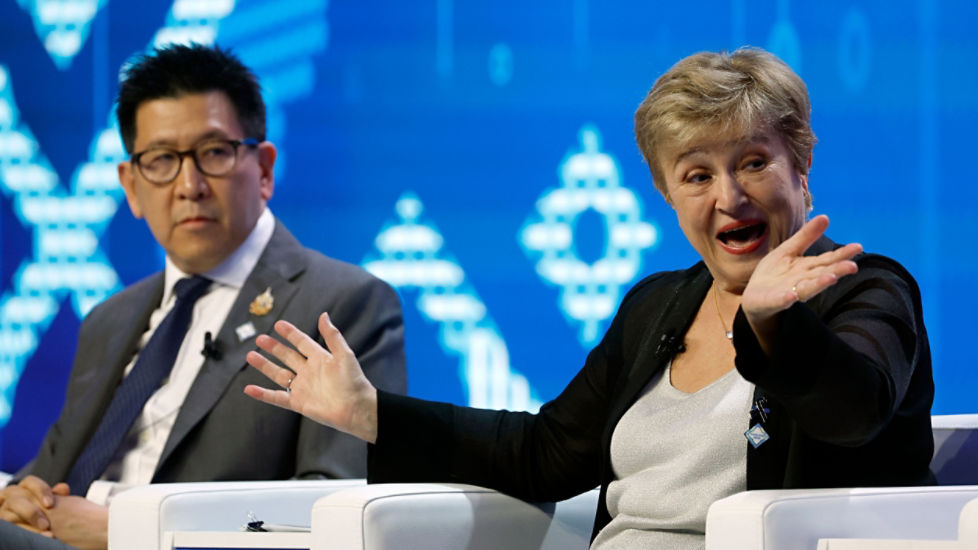
“The minutes suggested that a longer conflict would require the board to carefully balance the outlook for both inflation and economic activity,” Commonwealth Bank senior economist Ashwin Clarke said.

This wasn’t surprising given the uncertainty in overseas developments and their impact on Australia, Clarke said. The fact that the minutes noted that it wasn’t possible to “to predict the future path for the cash rate target with any confidence from here” only underscored the point, he said.

“We still expect the RBA to increase the cash rate by 25 basis points at its May meeting," Clarke said. “But this decision is a line-ball and a lot can happen internationally between now and the RBA meeting in five weeks,” he said.

Forecasts still evolving: Chalmers

Treasurer Jim Chalmers said it was not inevitable that the economy would shrink due to the war, but forecasts were still evolving given the volatile situation.

"We've got a few weeks still before we finalise the forecast for the budget," he told reporters.

"We're not currently anticipating our economy to go back, but obviously, there's more than the usual amount of global economic uncertainty."

Consumer confidence has plummeted since the start of the war, causing economists to slash their predictions for household spending in 2026.

The RBA doves were also concerned about the strength of the jobs market, citing falling unit labour costs as a sign it might not be as strong as their colleagues believed.

"A final source of uncertainty related to how the current conflict in the Middle East would evolve," the minutes said.

"There was considerable uncertainty about almost every aspect of the conflict at this early stage and therefore its impact on global and domestic economic conditions."

‘A clear commitment to returning inflation to target’

However, the majority still believed an interest rate rise was warranted to "demonstrate a clear commitment to returning inflation to target" and avoid the need for much more restrictive measures in the long-term.

Last week Commonwealth Bank economists said headline inflation was now expected to rise to around 5.4 per cent by mid-2026; a figure significantly higher than earlier forecasts.

Australia’s economic outlook has shifted significantly following the outbreak of the Middle East conflict, they said. Higher energy prices are now expected to lift inflation, slow growth and push unemployment modestly higher over the next two years, according to CBA analysis.

Trimmed mean inflation, the Reserve Bank’s preferred underlying measure, is forecast to peak at 3.8 per cent, before easing gradually as economic growth slows and labour market conditions soften.

Newsroom

For the latest news and announcements from Commonwealth Bank.

Some of the content presented in this section has been provided by Australian Associated Press (AAP). Commonwealth Bank of Australia (CommBank) is not responsible for the accuracy, quality, reliability, or completeness of AAP information or any linked websites. This material is published for general information purposes only.