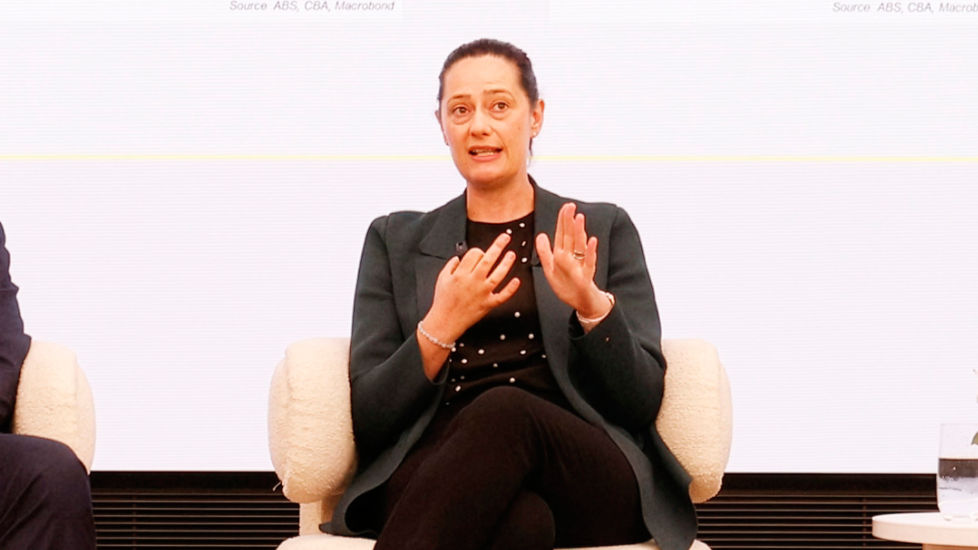
The Federal Budget delivered a credible path back to surplus, supported by spending restraint and significant tax changes, CommBank Chief Economist Luke Yeaman says.
“The long‑term budget position does lift as a result of this budget,” Yeaman said, pointing to an improvement in the underlying cash balance and a sharp decline in projected gross debt over the decade ahead.
Speaking on the latest episode of the CommBank View: Economics & Markets podcast, Yeaman said the Budget also represented “something of a missed opportunity” in helping the Reserve Bank of Australia curb inflation. While it hadn’t materially altered the inflation outlook, he described the overall stance as “broadly neutral to mildly expansionary”.
“When the RBA is sitting down looking at their next set of forecasts, we don’t think the budget will be playing a big role,” he said, noting that the government had “actively put money into the economy” during a period when inflation pressures were expected to be most acute.
Despite this, Yeaman said CommBank hasn’t changed its view on interest rates, with the RBA expected to keep the official cash rate on hold for some time.
NDIS savings central to budget outlook
A significant share of the Budget’s long-term improvement relies on a sharp slowdown in National Disability Insurance Scheme (NDIS) spending, an area Yeaman said was critical but difficult to deliver.
“The NDIS has been the biggest cost pressure in the Federal Budget for at least the last four, five, six years,” he said, noting strong growth in the scheme had driven repeated upward revisions to budget estimates.
The Budget assumes NDIS cost growth will slow to an average of 2 per cent over the next four years, down from around 10 per cent previously, before returning to 5 per cent longer‑term. Yeaman said those assumptions were now “baked into the budget bottom line”.
However, he warned the targets were ambitious and carried material risk.
“If they can’t deliver that, then that’s going to punch a hole in the budget estimates and the budget improvement that we described,” he said.
“It’s going to require cooperation from the state governments… and it’s going to require a lot of community support, particularly from the disability community,” Yeaman said.
While welcoming efforts to improve the scheme’s sustainability, he said execution would be critical.
“The numbers are very ambitious… and it’s not going to be easy to drive this change,” he said, adding there was “a high risk that some of those savings won’t be delivered particularly in the next two to three years”.