RBA's only question was when, not if

The RBA's split decision on intertest rates was only a question of timing and not about the direction rates need to go in, putting the reaction of Australian households squarely in focus, CBA's Belinda Allen says.

By Belinda Allen, Head of Australian Economics

17 March 2026

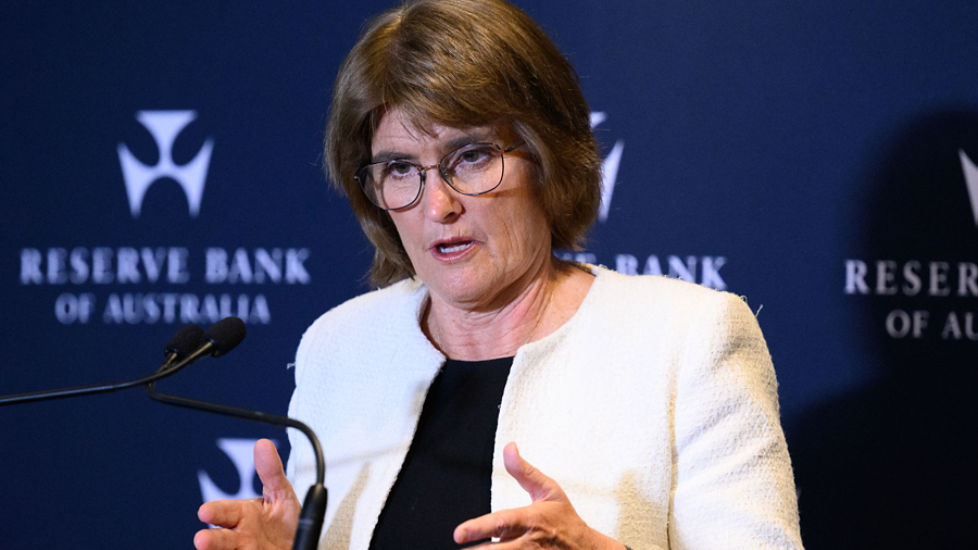
Reserve Bank of Australia Governor Michele Bullock addresses media in Sydney, Tuesday, March 17, 2026. Credit: AAP Image/Dan Himbrechts

Key points

  • The RBA Monetary Policy Board lifted the cash rate by 25bp to 4.10% as expected.
  • It was a 5-4 split by the Monetary Policy Board, reinforcing our view that it was a line ball decision.
  • The debate was about the timing of a rate hike not the direction of interest rates.
  • Inflation was the main concern in lifting the cash rate in back-to-back meetings, with a material risk that inflation will remain above target for longer than expected.
  • The rate hike was driven by domestic economic conditions.
  • The Iran conflict added another key source of concern and will be critical from here.
  • Our call of a rate hike in May is another line ball decision. The likelihood of a third consecutive rate hike will depend on the status of the war in the Middle East and the response of the household sector to two rate hikes and rising prices.

Domestic economic conditions drove the rate hike

The RBA lifted the cash rate by 25 basis points for the second consecutive meeting, taking the official cash rate to 4.10%.

Over the past week economist and market expectations moved swiftly to expect a rate hike today (including us) following a podcast appearance by RBA Deputy Governor Andrew Hauser, during which he said the war in the Middle East could push inflation higher than forecast.

Before today’s announcement, markets were pricing in an approximately 70% chance of a rate hike today and 24 out of 33 economists polled by Bloomberg expected a hike.

Line ball decision

In the end the decision was line ball, with a majority 5-4 split to lift the cash rate. RBA Governor Michele Bullock noted in the press conference after the announcement that the split vote was about timing and not about direction of the cash rate.

As we noted in our preview, the domestic data flow alone justified a rate hike at the March meeting. The RBA’s statement and press conference noted similar themes: capacity pressures were greater than expected, the unemployment rate is lower than expected and growth in private sector demand was stronger than anticipated.

Uncertainty over how restrictive the cash rate is – that is, how likely it is to put the brakes on the economy - remains. It was these facts that drove the decision to hike. Domestic demand growth needs to slow to bring the economy back into balance and ensure inflation returns to the RBA’s target band of 2% to 3%.

Middle East adds complications

But new complications have arisen adding to the inflation challenge. The war in the Middle East is lifting fuel prices and inflation expectations. Excess demand needs to slow to bring inflation back to target and protect against second order impacts from higher inflation.

The decision today is another feather in the cap of the RBA’s inflation fighting credibility.

The decision to fight inflation though is being made easier given the labour market continues to hold up better than expected.

Because of that, the RBA can focus on the prices and inflation side of its mandate, rather than the full employment side.

Case remains for another hike in May

From here we retain our call for a rate hike in May given the current economic climate and the need to close the ‘output gap’ – the difference between what the economy is producing and what it could produce without fueling inflation – by slowing excess demand.

But the May RBA meeting is seven long weeks away and as we have seen in the past two weeks, the global economic climate can shift dramatically.

We expect the war to be months, not weeks long, and also expect energy prices to rise from here. But so too could growth concerns, and the Governor highlighted those risks several times in her press conference.

Consumer demand will be key to watch

We will provide an updated view of the Australian economy in coming days, including scenario analysis with different paths of the oil price and supply chain disruption from here, as well as the potential monetary policy response.

But domestic demand and how it tracks between now and then will be crucial to watch.

Households will be under more pressure from higher interest rates and higher petrol prices. Both will further constrain income growth.

The reaction to this is hard to predict, but households, in aggregate, are entering into this challenging environment with an above average savings rate and after a period of strong real household disposable income growth.

Taken as a whole, Australian households have the ability to ‘smooth’ their consumption by dipping into their savings or borrowing more if they choose.

CBA’s weekly card spending data has shown an increase in spending in March after the decline in spending during February that was highlighted in the CommBank Household Spending Insights series.

Home price data has not had much reaction to date. Between now and May, first quarter trimmed mean CPI – the RBA’s preferred measure of inflation – will be the key highlight, but more frequently updated data on inflation expectations and household data will be critical to watch.


This is an edited version of Belinda Allen’s research note RBA lifts the cash rate for the second consecutive meeting

Newsroom

For the latest news and announcements from Commonwealth Bank.

Things you should know

Media releases are prepared without considering an individual reader’s objectives, financial situation or needs. Readers should consider the appropriateness to their circumstances. Visit Important Information to access Product Disclosure Statements or Terms and Conditions which are currently available electronically for products of the Commonwealth Bank Group, along with the relevant Financial Services Guide. Target Market Determinations are available here. Loan applications are subject to credit approval. Interest rates are correct at the time they are published and are subject to change. Fees and charges may apply.