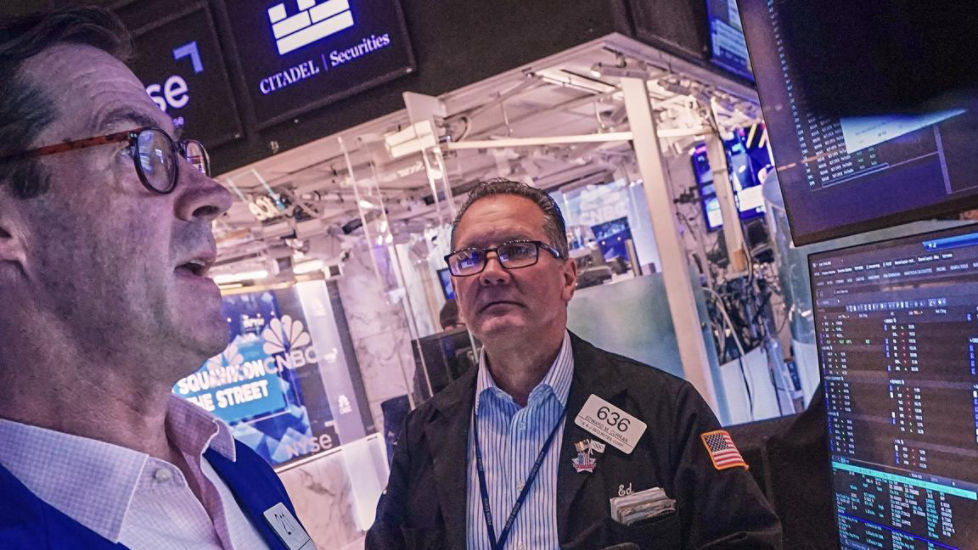
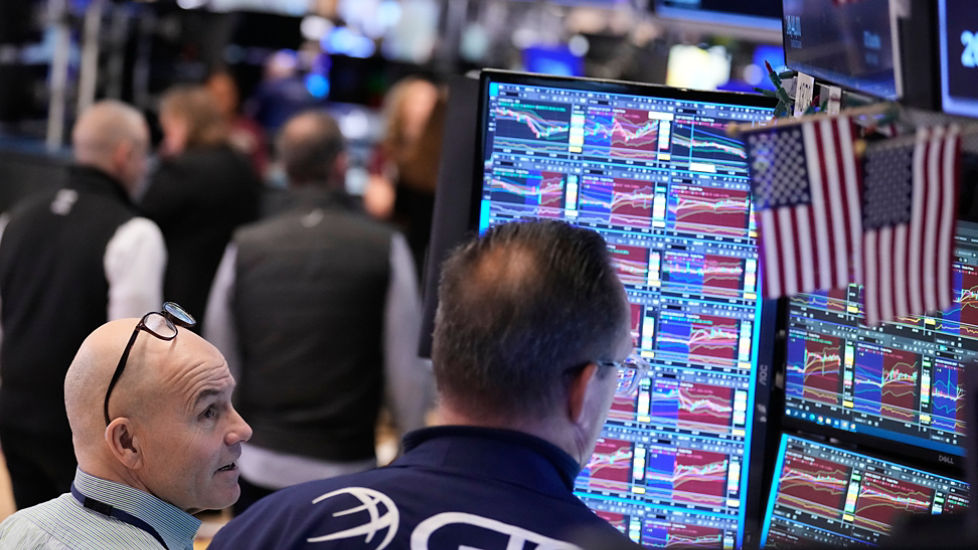
More drops for technology stocks weighed on Wall Street Wednesday.
The S&P 500 fell 0.5% for its fifth modest loss in the last six days. The Dow Jones Industrial Average rose 260 points, or 0.5%, and the Nasdaq composite sank 1.5%.
Advanced Micro Devices dropped 17.3% even though the chip company reported a stronger profit for the latest quarter than analysts expected. It also gave a forecast for revenue for the start of 2026 that topped analysts' expectations, but that may not have been enough for investors after its stock had doubled over the last 12 months.
Tech stocks are broadly feeling pressure, even when they deliver stronger-than-expected profits. Big Tech stocks are facing criticism that their prices shot too high following their yearslong dominance of the market. Companies like software makers, meanwhile, are struggling with questions about whether they'll lose in the future to competitors powered by artificial-intelligence technology.
All told, the S&P 500 fell 35.09 points to 6,882.72. The Dow Jones Industrial Average rose 260.31 to 49,501.30, and the Nasdaq composite fell 350.61 to 22,904.58.
Gold and silver climb
Gold and silver prices rose after paring back bigger, early gains. Gold added 0.3% to settle at $4,950.80 per ounce after earlier climbing back above the $5,000 mark. It's been swinging sharply after roughly doubling in price over 12 months. It neared $5,600 last week and then fell below $4,500 on Monday.
Silver's price, which has been on an even wilder ride, rose 1.3%.
Their prices had surged as investors looked for safer places to keep their money amid worries about everything from tariffs to a weaker U.S. dollar to heavy debt loads for governments worldwide. But critics said their prices rose too far, too fast and were due for a pullback.
Mixed news for US economy
In the bond market, Treasury yields held relatively steady following a couple mixed reports on the U.S. economy.
One from ADP Research suggested that US employers outside government hired fewer workers last month than economists had expected. A second from the Institute for Supply Management said that growth for health care, construction and other US services businesses continued in January at the same pace that economists expected.
That second report, though, also indicated that prices paid by US services businesses rose at a faster rate in January, which could be a discouraging signal for inflation.
The Associated Press