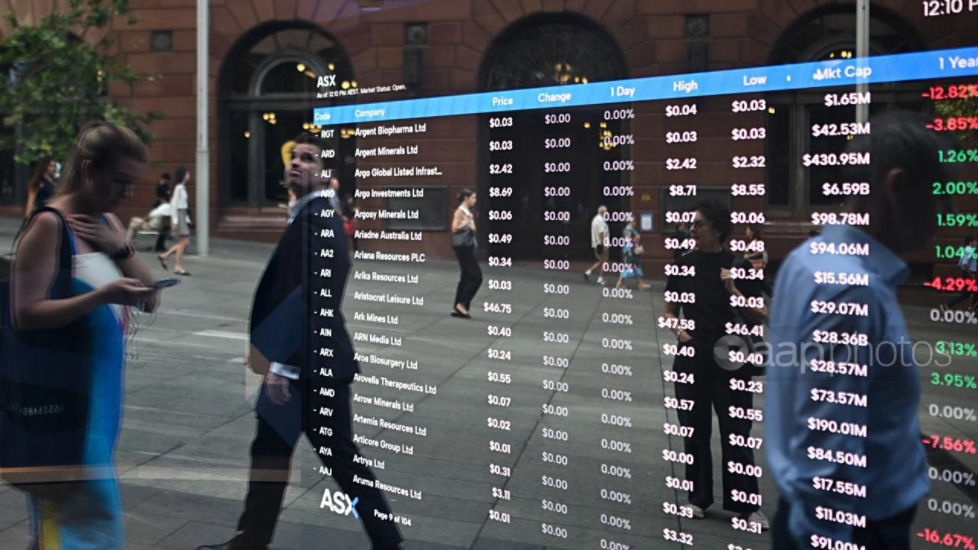
AI was a major influence on this year’s half-year season, Besarati said, with a selloff in software stocks beginning in January over concerns that AI could disrupt established businesses.
“That continued through February,” she said, with AI-related concerns also spreading to other industries. Interest rates, inflation and jobs data were also factors that influenced the trajectory of the market throughout February, she said.
Combined with new tariffs and the situation in Iran, “we’ve had a lot overshadowing this reporting season”, Besarati said.
Australian investors in a volatile mood
The strong overall performance of the market was down to several sectors that outperformed, Daghlian said. Two of the largest sectors, mining and financials, did well, as did consumer staples, he said.
But a number of sectors including tech and healthcare came into 2026 under a cloud and continued to struggle through reporting season, Daghlian said.
Of the 146 stocks CommSec followed through the season, almost half had share price movements of 5 per cent or more on the day they reported results, Daghlian said. About 20 per cent of companies rose or fell by more than 10 per cent on the day, he said.
Overall, investors seemed to be in a punitive mood, with little time for financial results that did not meet expectation.
“Those companies that disappointed were punished much more severely than companies that impressed were celebrated,” he said.
All of the biggest investor reactions were selloffs. “Five stocks moved by more than 20 per cent on the day they released results, and in every case the stock fell rather than rose,” Daghlian said.
Volatility had been widely predicted ahead of the season and that prediction proved to be accurate, Besarati said.
AI in focus for investors
With fears of AI disruption spreading across markets globally, Australian investors seemed more focussed on the impact of AI than on the actual financials of our listed tech companies, Daghlian said.
“The market wanted evidence that companies are taking AI seriously but also using it to their advantage,” he said.
Investors wanted to know that “they are getting ahead of the threat, rather than being eaten up by it”, he said, saying investors were looking for signs of falling costs and increased productivity.
Miners deliver a solid showing
With plenty of uncertainty in markets, Australia’s listed gold miners performed well on the back of high gold prices during the reporting period. “Many of the gold miners on the Aussie market actually climbed to record highs on the days that they reported,” Besarati said. Tariff uncertainty later in the month also helped lift gold prices and mining stocks, she said.
Meanwhile Australia’s major iron ore miners all provided strong dividends during the period, Daghlian said, although in BHP’s case that was more down to the strong performance of its copper business.
Retailers battle poor consumer sentiment
Australia’s retailers have been battling poor consumer sentiment and many of their results were hurt by the cost of discounting designed to get consumers back into the shops, Besarati said. Right now, “customers are very value-conscious”, she said.
As a result, many retailers copped share price falls on reporting day, although there were some notable exceptions. Results from supermarket giants also varied, she said.