Oil prices sank overnight and stock markets worldwide rallied on hopes that the United States and Iran are nearing a deal to allow ships to deliver crude from the Persian Gulf.
The price for a barrel of Brent crude oil, the international standard, fell 7.8% to $US101.27, down from more than $US115 early this week. It dropped as President Donald Trump said the Strait of Hormuz could be "OPEN TO ALL" if Iran accepts a reported agreement that the US president did not detail.
The small strait has caused big trouble for the global economy because the war with Iran has blocked oil tankers from using it to exit the Persian Gulf. A reopening could allow oil to flow freely again and remove upward pressure on inflation that's driving prices up for all kinds of products worldwide.
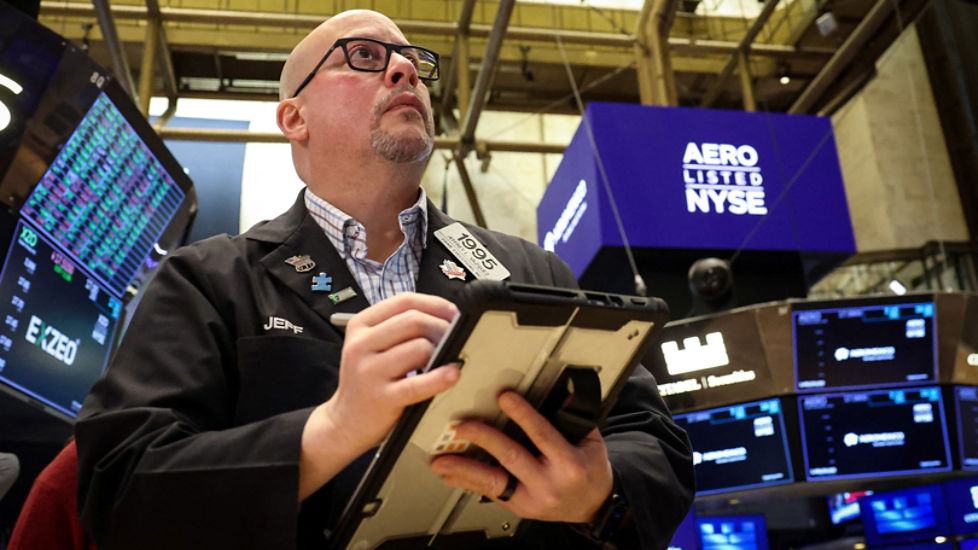
Wall Street stocks climb
On Wall Street, the S&P 500 climbed 1.5% for its best day in nearly a month and hit another all-time high. The Dow Jones Industrial Average jumped 612 points, or 1.2%, and the Nasdaq composite rose 2% to its own record.
Stock markets abroad had even bigger gains, with indexes leaping 6.5% in Seoul, 2.9% in Paris and 2.1% in London.
Hopes about a possible end to the war with Iran have risen several times already on Wall Street, only to get dashed each time, and that could happen again.
On Wednesday, US time, oil prices pared some of their steepest losses after the price for a barrel of Brent briefly fell below $US97 before returning above $US100 after Trump threatened to start bombing "at a much higher level and intensity" if Iran does not accept the agreement.
Wall Street nevertheless latched onto some potentially encouraging signals. Trump said on Tuesday he was pausing his effort to forcefully reopen the Strait of Hormuz to commercial ships. And China's foreign minister called for a comprehensive ceasefire following a meeting with Iran's foreign minister. That could be influential because of how closely tied Iran is to China economically and politically.
Wall Street profits roll on
In the meantime, big US companies continued to turn in much stronger profits for the start of 2026 than analysts had expected. That's supporting the stock market despite all the uncertainties created by the war.
Outside of earnings reports, companies with big fuel bills jumped on hopes that oil prices will continue to ease.
All told, the S&P 500 rose 105.90 points to 7,365.12. The Dow Jones Industrial Average jumped 612.34 to 49,910.59, and the Nasdaq composite climbed 512.82 to 25,838.94.
In the bond market, US Treasury yields sank as falling oil prices took pressure off inflation. The yield on the 10-year Treasury dropped to 4.35% from 4.43% late Tuesday - a notable move for the bond market.
Lower yields can bring down rates for mortgages and other kinds of loans going to households and businesses, which in turn can give the economy a boost. Lower yields also tend to push upward on prices for stocks and other kinds of investments. The 10-year yield, though, remains well above its 3.97% level from just before the war.
The Associated Press