Oil drives Wall Street lower
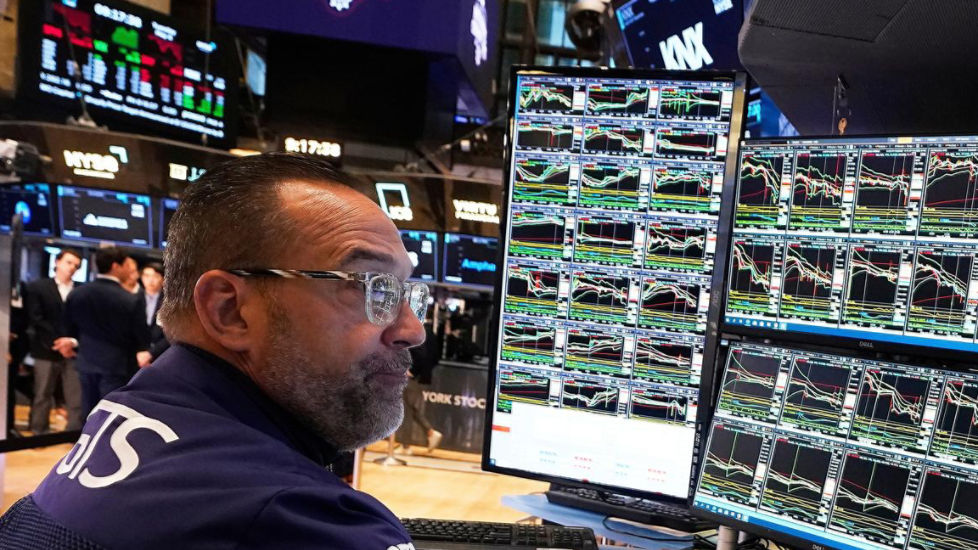
Stocks on Wall Street lost ground again on Wednesday as the price of crude oil climbed back above $US100 a barrel amid further escalation in the US war with Iran.
The S&P 500 index fell 0.5%. The Dow Jones Industrial Average dropped 0.8%, and the Nasdaq composite gave up 0.6%. The indexes are each on track for a weekly loss.
The losses were broad, with retailers among the companies that pulled the market lower. All told, the S&P 500 fell 37.16 points to 7,636.36. The Dow dropped 405.41 points to 52,380.66, and the Nasdaq gave up 168.07 to close at 26,253.34.
Iran conflict lifts oil
Oil prices drove much of the action on Wall Street. The US destroyed five Iranian tankers on Tuesday in a series of attacks between the two nations. The conflict that began in February has essentially shut down traffic in the Strait of Hormuz, where a fifth of the world's oil supply passed before the war began.
The price of Brent crude, the international standard, rose 3.4% to settle at $US101.21 a barrel. It marks the first time the price surpassed $US100 a barrel since July.
The Iran war is likely going to keep oil prices elevated at least through the US midterm elections in November, President Donald Trump said on Wednesday.
The jump in oil prices over the course of the war has fuelled already high inflation. Petrol prices in the US are up about 32% from a year ago to $US4.22 per gallon. Higher fuel prices cut into household budgets directly when it comes to the cost of driving, but they also indirectly raise prices for goods because of higher shipping costs.
The price of diesel, which can have an outsized impact on consumers because it is used in shipping and production, hit an all-time high on Friday and has continued to climb since. The average price for a gallon reached $US5.94 overnight and is now 9 US cents higher than it was on Friday.
Inflation reports ahead
Inflation was already stubbornly high when the US started its war against Iran because of the ongoing US trade war with much of the world. That trade war is also heating up, especially between the US and its close ally and trade partner Canada.
Wall Street will get more updates this week on inflation, starting with a look at prices at the wholesale level on Thursday with the release of the Producer Price Index for August. It measures prices businesses pay for goods before they reach customers. That report will be followed up on Friday with the release of the Consumer Price Index, or CPI, for August, which shows the more direct price impact for households.
The latest reports are expected to show that the rate of inflation remains above 3%. That has been an issue for the Federal Reserve, which is aiming to hold inflation at a target rate of 2%. The central bank has been holding rates steady, but Wall Street is leaning towards a 62% chance that it will raise its benchmark interest rate at its meeting next week, according to data from CME Group.
Higher interest rates make borrowing more expensive. The goal of raising interest rates is to slow the economy and cool inflation.
Treasury yields rise
Rising Treasury yields in the bond market were also weighing down stocks on Wall Street on Wednesday.
The US Treasury Department on Wednesday said it would buy back up to $US6 billion in long-term debt. That follows an announcement in August previewing plans for an unusually large buyback in an effort to contain rising yields, which make it more expensive for US companies to borrow money and also weigh down other investments, such as stocks.
Bond yields had been holding steady before the announcement, but gained ground shortly after.
The yield on the 10-year US Treasury bond, which tends to affect American mortgage rates, rose to 4.85%, its highest point since late October 2023, before easing to 4.84% from 4.80% late on Tuesday. The yield on the two-year Treasury, which tends to track expectations for Fed moves on interest rates, rose to 4.43% from 4.39% late on Tuesday.
Bond yields have an inverse relationship to prices. Yields rise as bond prices fall. Rising yields signal that investors are demanding a higher return from Treasuries.