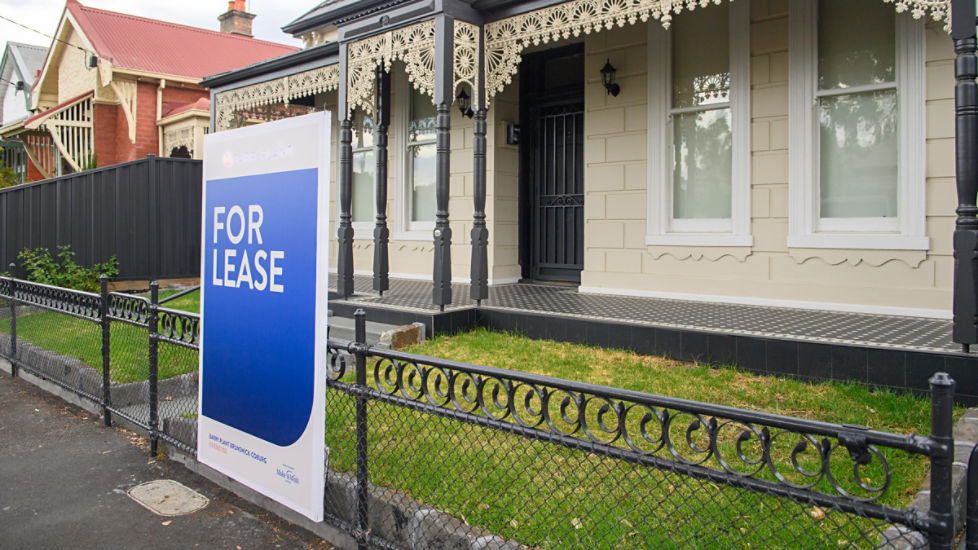
Shops keep closing, but there's never been less empty retail space

Despite a string of retailer collapses since May, Australia's shopping centre vacancy rate has fallen to its lowest level since 2018.

15 July 2026

A shopping strip in the evening.

Key points

  • Shopping centre vacancy down to 4.4%, the lowest since 2018
  • Up to 160 stores could close nationally from recent retailer administrations, mostly clothing and footwear
  • Industrial vacancy eased to 4.8%, down from a recent peak of 5.0%
  • Commercial property turnover up 16% to $27.6 billion in the year to May

Store closures aren't leaving empty shopfronts behind

A number of retailers have entered voluntary administration since May, a wave that could result in the closure of up to 160 stores nationally, mostly in the clothing and footwear category. Despite that, shopping centre vacancy kept falling through the first half of 2026, dropping to 4.4% — the lowest level since 2018, according to JLL Research. Vacancy is lowest of all in the Large-format and Regional shopping centre subsectors, at just 2.8% and 2.0% respectively, while CBD centres carry the highest vacancy, though even that is declining.

Why the numbers don't match the headlines

Higher interest rates have slowed consumer spending, which would normally be expected to soften demand for retail property. Instead, landlords are backfilling closed stores quickly enough that vacancy keeps falling, and rents in the large-format sector rose 5.8% over the past year — the strongest of any retail property type. Industrial space has followed a similar pattern, with vacancy easing to 4.8% from a recent peak of 5.0%, as rental growth there returns to its long-term average of around 3% a year.

"With little prospect of yield tightening in the short term, income growth is central to lifting valuations," said Kevin Stanley, CBA's Director of Commercial Property.


A chart showing the commercial property vacancy rate between 2018 and 2026. Commercial property vacancy rate between 2018 and 2026. Source: JLL, CBA.

The bigger property picture

"Australian commercial property performed broadly in line with earlier periods through the turbulence of the second quarter 2026," Stanley said. Property sales turnover reached $27.6 billion in the year to May, 16% higher than the same time in 2025, according to RCA.

Queensland was the standout, with turnover up 69% to $7.2 billion on the back of Olympic preparations, population growth and business investment — while Victoria's turnover rose 26% to $5.5 billion, driven largely by industrial property demand.

Commercial property yields mostly held steady over the quarter, with the exception of further softening in cap rates for secondary offices in Canberra and the Melbourne CBD, and prime offices in Brisbane Fringe, Canberra and Perth CBD. The office sector remains the property market's outlier, with vacancy edging up to 16.9% nationally, though central Sydney and Brisbane bucked the trend with positive demand for space.

What could change the picture

CBA Economics expects the RBA to stay on hold for the remainder of 2026, with two 25 basis point rate cuts penciled in for mid-2027. "The outlook for commercial property, both the underlying fundamentals and valuations, is very much tied to interest rate movements from here," Stanley said.

Lower rates would likely lift demand for commercial property further, pushing vacancy further down.

Newsroom

For the latest news and announcements from Commonwealth Bank.

Things you should know

The information presented is an extract of a Global Economic and Markets Research (GEMR) Economic Insights report. GEMR is a business unit of the Commonwealth Bank of Australia ABN 48 123 123 124 AFSL 234945. 

This extract provides only a summary of the named report. Please use the link provided to access the full report, and view all relevant disclosures, analyst certifications and the independence statement.  
 
The named report is not investment research and nor does it purport to make any recommendations. Rather, the named report is for informational purposes only and is not to be relied upon for any investment purposes.  
 
This extract has been prepared without taking into account your objectives, financial situation (including your capacity to bear loss), knowledge, experience or needs. It is not to be construed as an act of solicitation, or an offer to buy or sell any financial products, or as a recommendation and/or investment advice. You should not act on the information contained in this extract or named report. To the extent that you choose to make any investment decision after reading this extract and/or named report you should not rely on it but consider its appropriateness and suitability to your own objectives, financial situation and needs, and, if appropriate, seek professional or independent financial advice, including tax and legal advice.