Fed forecasts have flipped, so when is the next US interest rates move likely?

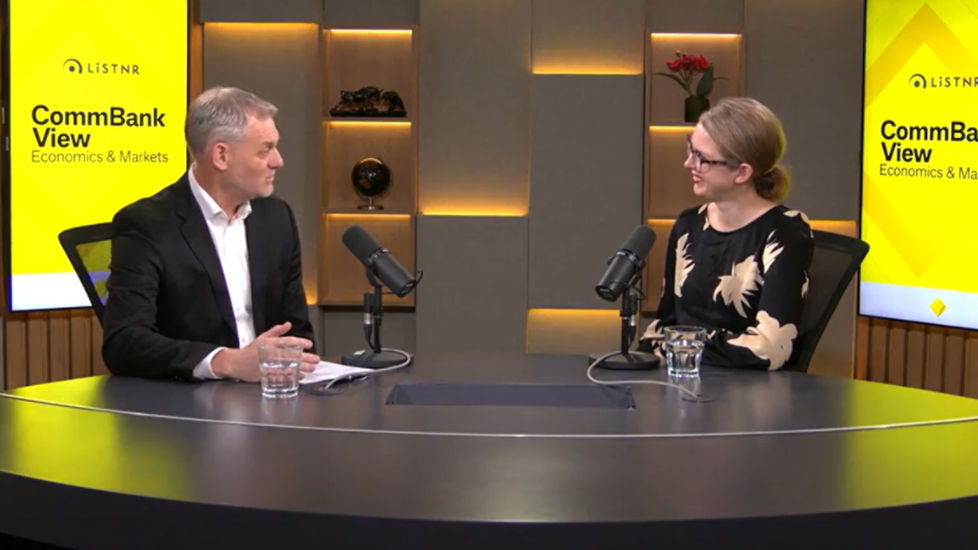
CommBank View | Strong growth, a new central bank leader and persistent inflation are changing expectations for US interest rates.

2 July 2026

Chairman of the U.S. Federal Reserve Kevin Warsh speaks during a news conference at the U.S Federal Reserve William McChesney Martin Jr. Building., in Washington, D.C., on Wednesday, June 17, 2026. The Federal Reserve Board left interest rates unchanged during the first meeting since Chairman Warsh was confirmed by the Senate. (Graeme Sloan/Sipa USA)

Key points

  • Expectations for US interest rates have flipped, with markets now pricing hikes after earlier forecasting cuts.
  • Inflation pressures are being driven by a mix of tariffs, strong demand and structural shifts in the global economy.
  • New Fed chair Kevin Warsh is signalling less forward guidance, fewer meetings and tighter communication, potentially increasing market uncertainty.

Australian investors are closely watching the shifting expectations for US interest rates rippling through global markets.

CommBank Senior Economist and Currency Strategist Kristina Clifton says market expectations have swung sharply in recent months, from anticipating interest rate cuts to pricing in potential hikes, as stronger economic data and geopolitical factors reshape the outlook for America.

“Markets were pricing two interest rate cuts,” Clifton said. “Then we saw energy prices rise really sharply … and we started to see some stronger economic data in the US. Now markets are pricing a hike as soon as September.”

A key driver behind CommBank’s forecasts for the US economy is what Clifton describes as “US exceptionalism” - with strong investment and tax cuts underpinning growth.

“We’ve been forecasting the US economy to have quite a strong year this year and next because they are investing such a lot into AI, and that is boosting economic growth,” she said.

“The strong spending coming from the tax cuts are also going to be attracting capital inflows into the US economy.”

Chart showing US interest rates. Source: St Louis Federal Reserve

New Fed Chair signals shift

The appointment of new Federal Reserve Chair Kevin Warsh is also shaping market expectations, particularly around how policy decisions are communicated.

Clifton said Warsh’s first meeting provided less detailed guidance for markets. Warsh has also made it clear he prefers less “forward guidance”, arguing decisions should be made based on incoming data rather than signalling a firm rate path in advance.

“His view is we should take away some of that noise,” she said.

“We could potentially see some more surprises on the day if the committee has a different view on the data.”

The new chair has also flagged wider changes, including having fewer policy meetings and tighter management of communication from officials. They’re measures he believes could reduce market noise, although they may also increase uncertainty.

Clifton said Warsh could also face political pressure. “Given Trump’s track record, it’s likely that Kevin Warsh is going to face pressure to lower interest rates,” she said.

But Clifton said the independence of the Federal Reserve remains critical, an idea Warsh has also backed since taking on the job.

“He has stated a number of times that he believes strongly in Fed independence… and in making the correct decisions for the economy,” Clifton said.

Where to listen

CommBank View: Economics & Markets is available across major podcast platforms.

Apple   |    LiSTNR     |   Spotify    |   YouTube

US interest rates outlook

Looking ahead, CommBank’s current base case is for the Federal Reserve to begin raising interest rates – also known as tightening monetary policy - later this year.

“Our base case since March has been that they would begin their tightening cycle in December… a total of 75 basis points of hikes,” Clifton said.

“But we are flagging the risk that it could start sooner than that.”

Read Kristina Clifton’s full research note.

Newsroom

For the latest news and announcements from Commonwealth Bank.

Things you should know

The information presented is an extract of a Global Economic and Markets Research (GEMR) Economic Insights report. GEMR is a business unit of the Commonwealth Bank of Australia ABN 48 123 123 124 AFSL 234945. 

This extract provides only a summary of the named report. Please use the link provided to access the full report, and view all relevant disclosures, analyst certifications and the independence statement.  
 
The named report is not investment research and nor does it purport to make any recommendations. Rather, the named report is for informational purposes only and is not to be relied upon for any investment purposes.  
 
This extract has been prepared without taking into account your objectives, financial situation (including your capacity to bear loss), knowledge, experience or needs. It is not to be construed as an act of solicitation, or an offer to buy or sell any financial products, or as a recommendation and/or investment advice. You should not act on the information contained in this extract or named report. To the extent that you choose to make any investment decision after reading this extract and/or named report you should not rely on it but consider its appropriateness and suitability to your own objectives, financial situation and needs, and, if appropriate, seek professional or independent financial advice, including tax and legal advice.