Inflation hits 4.9%, its highest since 2023, as fuel, power and building costs climb

Prices rose faster than expected in October. Here's what's driving the jump, why "housing" inflation isn't about house prices, and what it could mean for household budgets, business costs and interest rates.

25 November 2026

Roof work renovation. Source: Adobe Stock

Key points

  • Annual inflation rose from 4.3% to 4.9% in October
  • Fuel prices are up around a third in three months
  • Underlying inflation also beat expectations
  • "Housing" inflation reflects power bills, rents and building costs, not property prices or mortgage repayments
  • CommBank economists expect the RBA to leave the cash rate on hold in December

Prices rose faster than expected in October, pushing annual inflation to its highest rate since 2023.

The Consumer Price Index (CPI) rose 0.5% over the month, lifting annual inflation from 4.3% to 4.9%, according to the Australian Bureau of Statistics (ABS).

The result was above the 4.7% Commonwealth Bank economists had forecast earlier this month.

Housing was the biggest contributor to annual inflation, up 6.4% over the year on higher electricity and new home costs, the ABS said. Transport came next, up 10.6%, driven by fuel.

Chart showing Australia's monthly CPI movement and annual inflation from October 2025 to October 2026, with annual inflation rising to 4.9% in October 2026.

Why housing inflation isn't about house prices

The ABS’ measure of ‘housing’ inflation doesn’t include the prices existing houses are sold for or mortgage repayments

As measured in CPI, "housing" covers what households pay in rent, the cost of building a new home and utilities such as electricity.

That means the RBA's rate rises this year, which have pushed up repayments for many borrowers, don't show up directly in its ‘housing’ measure.

Of the parts that are measured, electricity costs are up 25.2% over the year, new home building costs increased 5.1% and rents climbed 3.5%.

Fuel and power bills push the annual rate higher

Fuel "again made a sizeable contribution" to the monthly rise, CBA Economist Trent Saunders said in a research note.

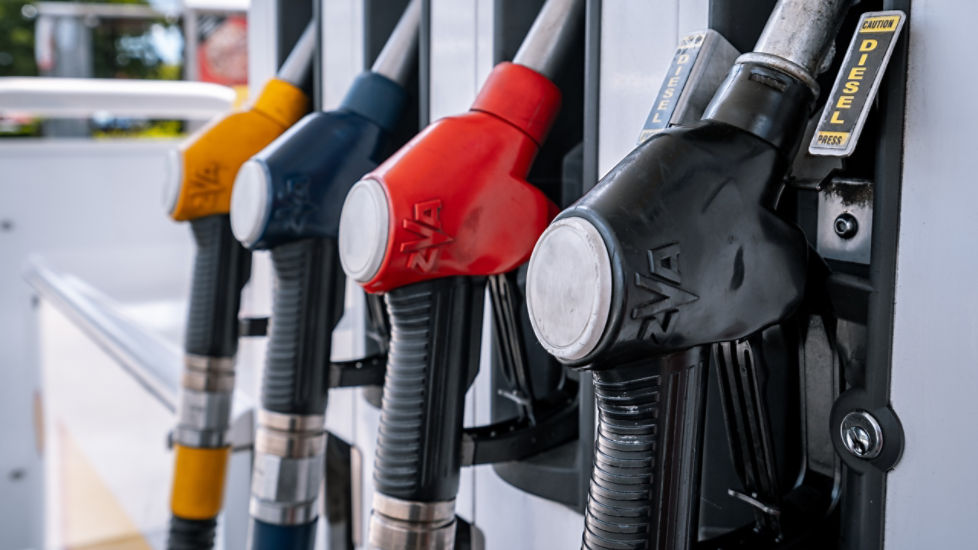
Fuel prices rose 6.3% in October, following jumps of 14.8% in August and 9.4% in September. That adds up to an increase of around 33% in three months. The ABS said higher world oil prices drove the October rise.

Electricity also pushed the annual figure higher, even though power prices fell 0.3% in October.

Annual electricity inflation jumped from 12.8% to 25.2%. Saunders said this "mainly reflected the large fall in electricity prices in October last year, when households received additional government rebates".

Price rises in October 2026: fuel 6.3%, childcare 2.4%, household goods 1.5%, clothing and footwear 1.2%, new homes 0.8%.

Clothes, homewares and new homes cost more

Much of the surprise came from categories where prices tend to swing around, "particularly clothing, household goods and travel", Saunders said.

After seasonal adjustment, clothing and footwear prices rose 1.2%, reversing much of September's fall. Furnishings, household equipment and services rose 1.5% after dropping 0.6% the month before. Childcare prices also rose 2.4%.

Prices for newly built homes - which measures what builders charge, not what homes sell for - climbed too. New dwelling prices rose 0.8% in October, when CommBank had expected no change, and are now 5.1% higher than a year ago.

Saunders said some builders had been offering discounts to win buyers, but that competition provided "less restraint on measured prices than we had anticipated".

The ABS said project home builders in some cities had cut discounts and promotional offers and raised base prices, despite reports of subdued demand.

For renters, the picture was steadier. Rents rose 0.1% in October and annual rent inflation held at 3.5%. The ABS said the twice-yearly indexation of Commonwealth Rent Assistance held down the monthly figure. Without it, rents would have risen 0.3%.

Saunders said slower growth in advertised rents pointed to some scope for rent inflation to ease over time.

Man shopping in a supermarket

Inflation explained: what it measures, what it doesn’t, and why it can feel disconnected from your budget

Inflation is mentioned often in economic coverage, but less often explained.

What it means for interest rates

The Reserve Bank of Australia (RBA) pays close attention to trimmed mean inflation, a measure that strips out the biggest price rises and falls.

It rose 0.5% in October, above the 0.3% rise CommBank and the market expected. That lifted the annual rate from 3.6% to 3.8%. Fuel was left out of the trimmed mean in October, which the ABS said was a key reason for the gap between headline and underlying inflation.

Saunders said the stronger result "reinforces the risks to the RBA's inflation outlook", with progress back to the RBA's target expected to be only gradual.

The RBA lifted the cash rate to 4.85% on 3 November, its fifth increase this year. CommBank economists expect it to leave rates on hold when its board meets on 7 and 8 December.

Stronger than expected trimmed mean inflation in October reinforces the risks to the inflation outlook, but Saunders said the underlying picture was more mixed than that one number suggested.

CommBank's measure of persistent inflation eased slightly over the past three months, while its measure of volatile inflation rose sharply. The end of card payment surcharges on 1 October also gave October prices a temporary boost as some businesses lifted shelf prices to cover card costs they could no longer surcharge, although the size of that effect remains uncertain.

"This divergence suggests that some of the recent strength in inflation may prove temporary," Saunders said.

Even if inflation eases from here, prices won't fall back. Lower inflation means prices rise more slowly, not that they return to where they were.

Newsroom

For the latest news and announcements from Commonwealth Bank.

Things you should know

The information presented is an extract of a Global Economic and Markets Research (GEMR) Economic Insights report. GEMR is a business unit of the Commonwealth Bank of Australia ABN 48 123 123 124 AFSL 234945.

This extract provides only a summary of the named report. Please use the link provided to access the full report, and view all relevant disclosures, analyst certifications and the independence statement.

The named report is not investment research and nor does it purport to make any recommendations. Rather, the named report is for informational purposes only and is not to be relied upon for any investment purposes.

This extract has been prepared without taking into account your objectives, financial situation (including your capacity to bear loss), knowledge, experience or needs. It is not to be construed as an act of solicitation, or an offer to buy or sell any financial products, or as a recommendation and/or investment advice. You should not act on the information contained in this extract or named report. To the extent that you choose to make any investment decision after reading this extract and/or named report you should not rely on it but consider its appropriateness and suitability to your own objectives, financial situation and needs, and, if appropriate, seek professional or independent financial advice, including tax and legal advice.