Help & support
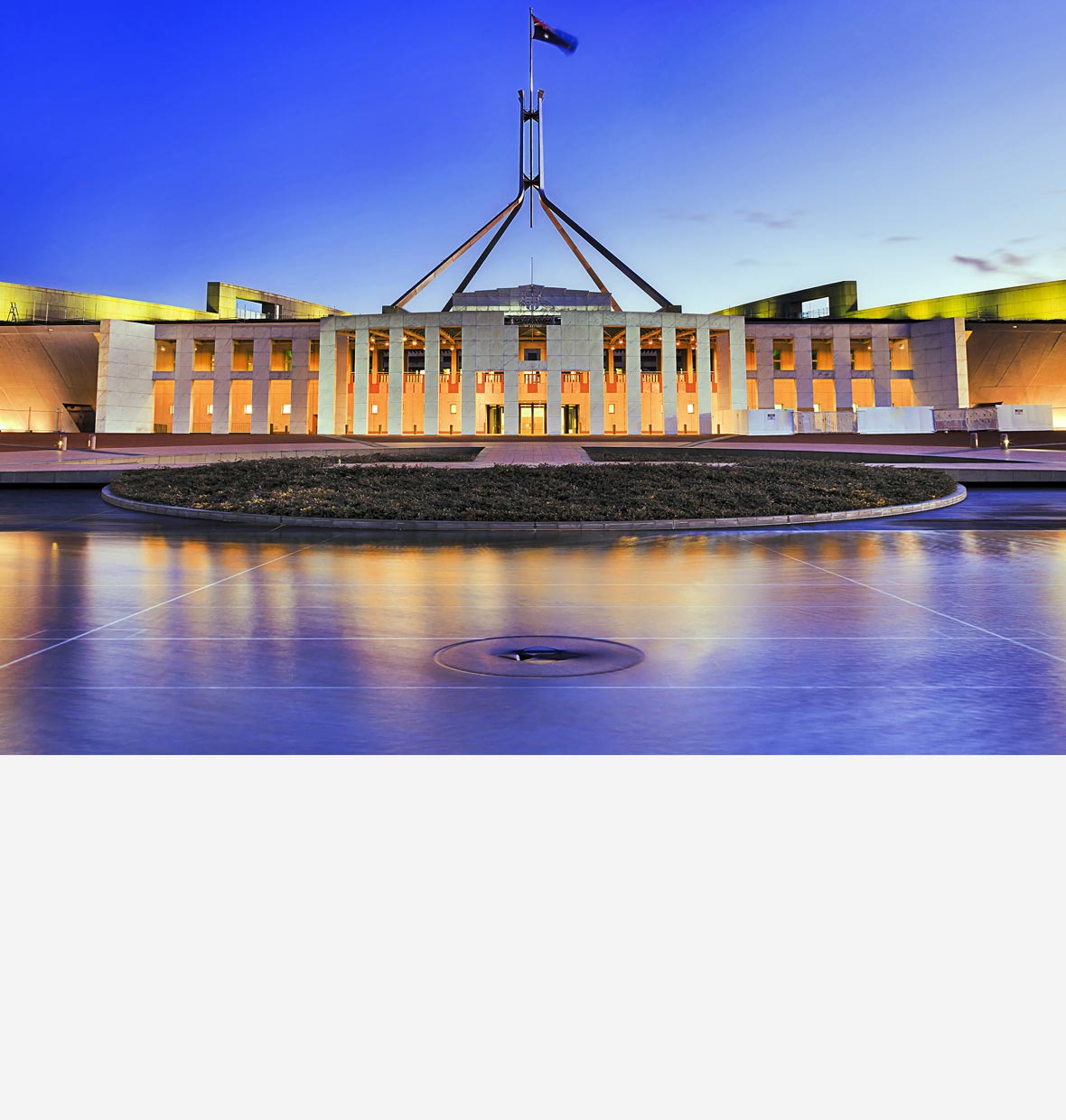
This Budget tries to achieve a lot — it succeeds in some areas but struggles to shift the dial in others. There are some big savings measures in the Budget, but there is also a substantial amount of new spending. In 2026-27, when the fight against inflation will be hardest, the deficit widens $3.2bn (relative to 2025-26). At the same time, new policy decisions result in a net spend of $6.5bn. We judge the stance of fiscal policy as neutral-to-mildly expansionary. Overall, the Budget is unlikely to shift the RBA’s near-term view on interest rates, but it does little to help in the fight against inflation. Greater spending restraint in 2026-27 would have reduced aggregate demand across the economy and created more headroom for the RBA. Inflation pressures are expected to remain challenging.
Over the decade, the Budget does some serious heavy lifting. It delivers major structural improvements in the fiscal position through a mix of higher taxes and lower spending. The last Budget didn’t show a realistic path back to surplus; this Budget does.
This Budget tries to achieve a lot. It succeeds in some areas but struggles to shift the dial in others. The Budget won’t shift the RBA’s thinking on interest rates, but it does little to help in the fight against inflation. There are some good measures in the Budget aimed at cutting red tape and lifting productivity. These are welcome but won’t materially lift the economy’s ‘speed limit’ or supply-side constraints. The Budget does not include any ‘big bang’ personal or corporate tax reform, instead prioritising long-term budget repair. This creates room for larger tax cuts or reform ahead of the next Federal election. In the meantime, there are modest personal and business tax cuts.
The underlying cash deficit for 2026-27 is now expected to be $31.5 bn, a small improvement of $2.8 bn since Mid Year Economic and Fiscal Outlook (MYEFO). The underlying cash balance (UCB) has been upgraded by $44.9 bn over the five years to 2029-30, with $27 bn of this improvement coming in the final year. Deficits remain stable at -1ppt/GDP for the next three years, before steadily improving. Over the decade, the Budget does some serious heavy lifting. It delivers major structural improvements through a mix of higher taxes and lower spending. The last Budget didn’t show a realistic path back to surplus; this Budget does. A balanced budget is now forecast in 2034-35 and by 2036-37 the UCB is projected to be 1.3ppt/GDP better than at MYEFO. However, this all relies heavily on the promised NDIS savings being fully delivered.
Global Economic and Markets Research (GEMR) is a business unit of Commonwealth Bank of Australia ABN 48 123 123 124 AFSL 234945 (CBA).
The information presented in each Research Report and Economic Insights has been prepared without considering your objectives, financial situation (including your capacity to bear loss), knowledge, experience or needs. You should, before acting on this advice, consider its appropriateness to your circumstances. View our Financial Services Guide (PDF 59kb).
The podcast and video links will bring you to a third-party website, owned and operated by an independent party ("3rd Party Website"). Any link you make to or from the 3rd Party Website will be at your own risk. Any use of the 3rd Party Website will be subject to and any information you provide will be governed by the terms of the 3rd Party Website, including those relating to confidentiality, data privacy and security. CBA does not endorse or approve and makes no warranties, representations or undertakings relating to the content of the 3rd Party Website.
CBA disclaims liability for any loss, damage and any other consequence resulting directly or indirectly from or relating to your access to the 3rd Party Website or any information that you may provide or any transaction conducted on or via the 3rd Party Website or the failure of any information, goods or services posted or offered at the 3rd Party Website or any error, omission or misrepresentation on the 3rd Party Website or any computer virus arising from or system failure associated with the 3rd Party Website.
Please visit Markets Research to access Economic Insights and Research Reports, and view all relevant disclosures, analyst certifications and the independence statement. If you have a complaint, the Bank’s dispute resolution process can be accessed on 13 22 21 when in Australia, and +61 2 9841 7000 from overseas.
For information on our privacy and information handling practices, please refer to the Group Privacy Statement.