Help & support

A Bridging loan is a home loan that helps you buy a new property before selling your existing one. Bridging loans have a maximum loan term of 12 months.
It “bridges” the gap between:
Once your existing property is sold, the sale proceeds are used to pay off your Bridging loan.
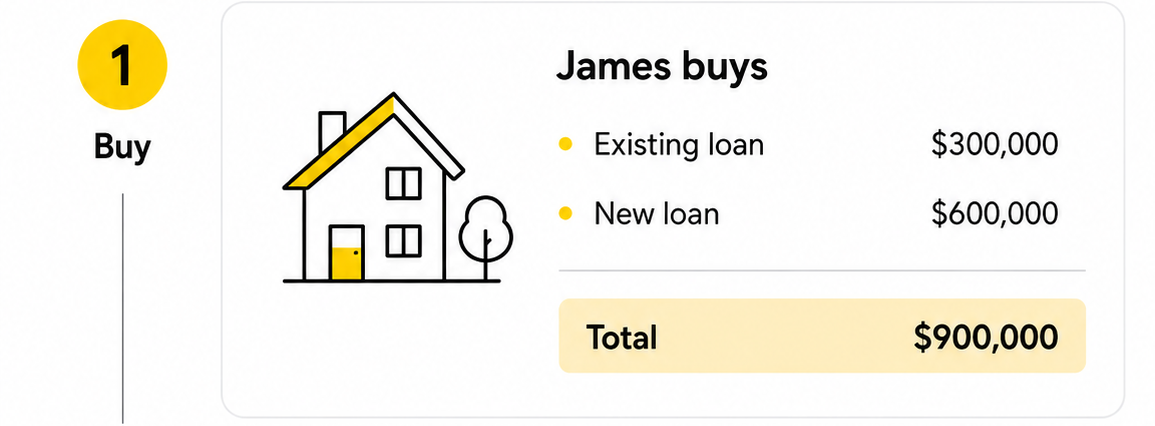
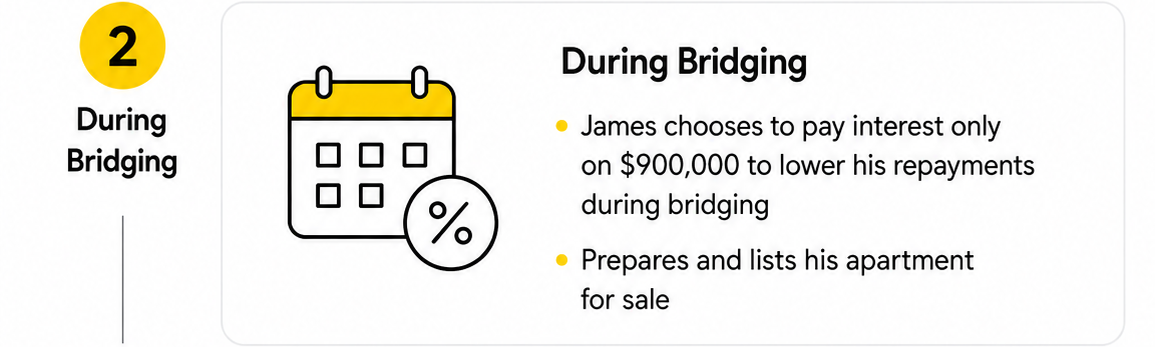
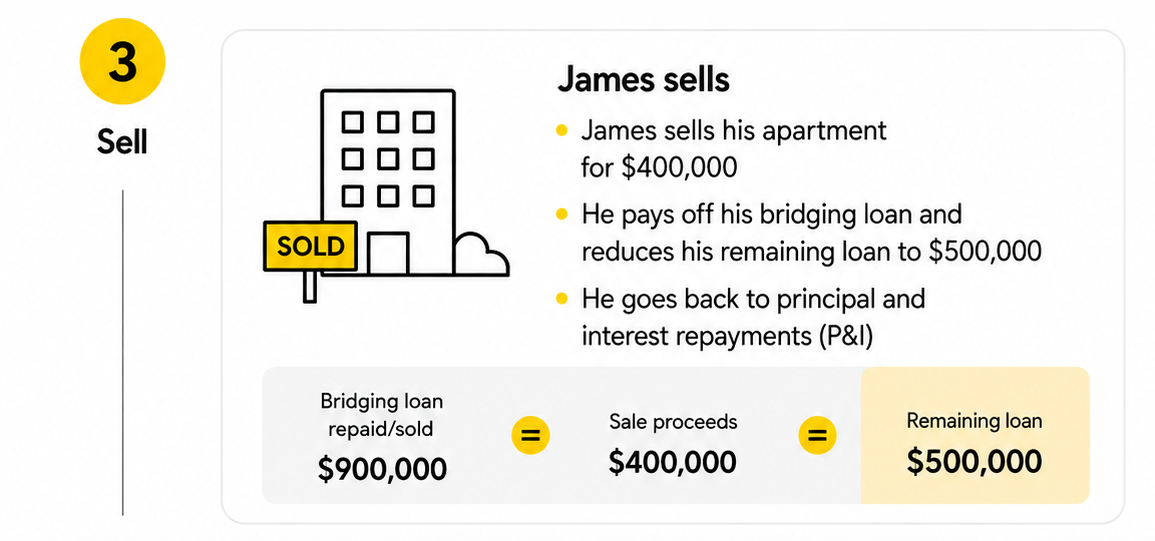
See how a Bridging loan works step-by-step through an example of James upgrading to a new home before selling his existing apartment.
A Bridging loan may be suitable if:
It’s often used when you want more control over timing, rather than lining up buying and selling perfectly.
Avoid temporary renting or storage between homes.
A Bridging loan is a Standard Variable Rate (SVR) home loan, giving you the flexibility to manage your loan with features like additional repayments and Interest Only options during the bridging period.
Save on interest while having access to your money by using an Everyday Offset Account.*
Enjoy discounts on eligible loans and credit cards.
A home loan Australians choose. 1 in 5 customers chooses CommBank for their home loan.20
Get into your first home sooner. Over 5x low-deposit options designed to help first home buyers enter the market faster.21
Expert help, wherever you are. Get guidance from one of over 1,400 Home Lending Specialists across Australia.22
Helping more first home buyers succeed. Supporting more than 80,000 first home buyers into home ownership.23
A Bridging loan can offer flexibility, but it’s important to understand how it works and the associated costs.
Holding two properties
During the bridging period, you’ll have commitments linked to both properties.
Interest costs
Bridging loans are typically Interest Only. The longer it takes to sell your existing property, the more interest you may pay.
Sale price risk
If your property sells for less than expected, you may be left with a higher loan balance than planned.
Timing
You’ll need to sell your property within the agreed 12-month loan term.
If this doesn’t happen, we’ll work with you on next steps. This may include:
Eligibility#
Bridging Loans are available to eligible CommBank customers and are subject to credit approval.
If things don’t go to plan
Like any home loan, if the loan remains unpaid, we may need to recover the loan by selling the property.

Talk to a Home Lending Specialist about whether a Bridging loan could work for your situation.
Bridging loans have a 12-month loan term. You’ll need to sell your current property within this timeframe.
During the Bridging period, you’ll need to make Interest Only payments on your Bridging loan. This can help keep your payments lower while you’re in the process of selling your existing property.
Once your existing property is sold and the Bridging loan is repaid, you’ll continue to make repayments on your loan for your new home based on your chosen repayment type.
Interest is calculated daily and charged monthly. The longer it takes to sell your current property, the more interest you may pay.
The sale proceeds are used to pay off your Bridging loan. You’ll then continue with your remaining home loan balance.
Yes. You can make additional repayments or pay off your Bridging loan early, with no penalties.
Get help from Ceba in the CommBank app or connect with a specialist who can message you back. You’ll need CommBank app notifications turned on so you know when you’ve received a reply.
Book instantly to speak to a Home Loan Specialist at a time that suits you.
Redraw, change your repayments or loan type to better meet your needs and more.
Fast-track your call, see expected wait times and connect with a specialist in the CommBank app.
Get instant help from our virtual assistant or chat to a specialist.
*An Everyday Offset is a transaction account linked to your eligible variable rate home loan or investment home loan. Money you put into your Everyday Offset Account reduces the balance on which we charge interest. No interest is earned on the balance of your Everyday Offset Account, even if it exceeds the balance of the eligible home loan.
#A bridging loan is available to eligible CommBank customers.
Eligible customers:
The bridging loan option is only available on our Standard Variable Rate Home or Investment Home Loan products.
The target market for these products will be found within the product’s Target Market Determination, available here.
20 Figure based on CommBank’s 20.54% Australian Prudential Regulation Authority (APRA) market share as of June 2026 (includes Unloan; excludes RMG).
21 Includes Australian Government 5% Deposit Scheme, Australian Government Help to Buy Scheme, Lenders Mortgage Insurance (LMI), Low Deposit Premium (LDP), and Guarantor Support.
22 Data reflects CommBank branch, mobile and direct Home Lending Specialists in Australia as of 30/06/2026. Excludes Premier Banking, Business Home Lending and Private Banking specialists.
23 Data represents home ownership through Australian Government 5% Deposit Scheme backbook as at 30/06/2026.